September 24, 2026 · BTCD Team
How Stake DAO Boosts Our Curve LP
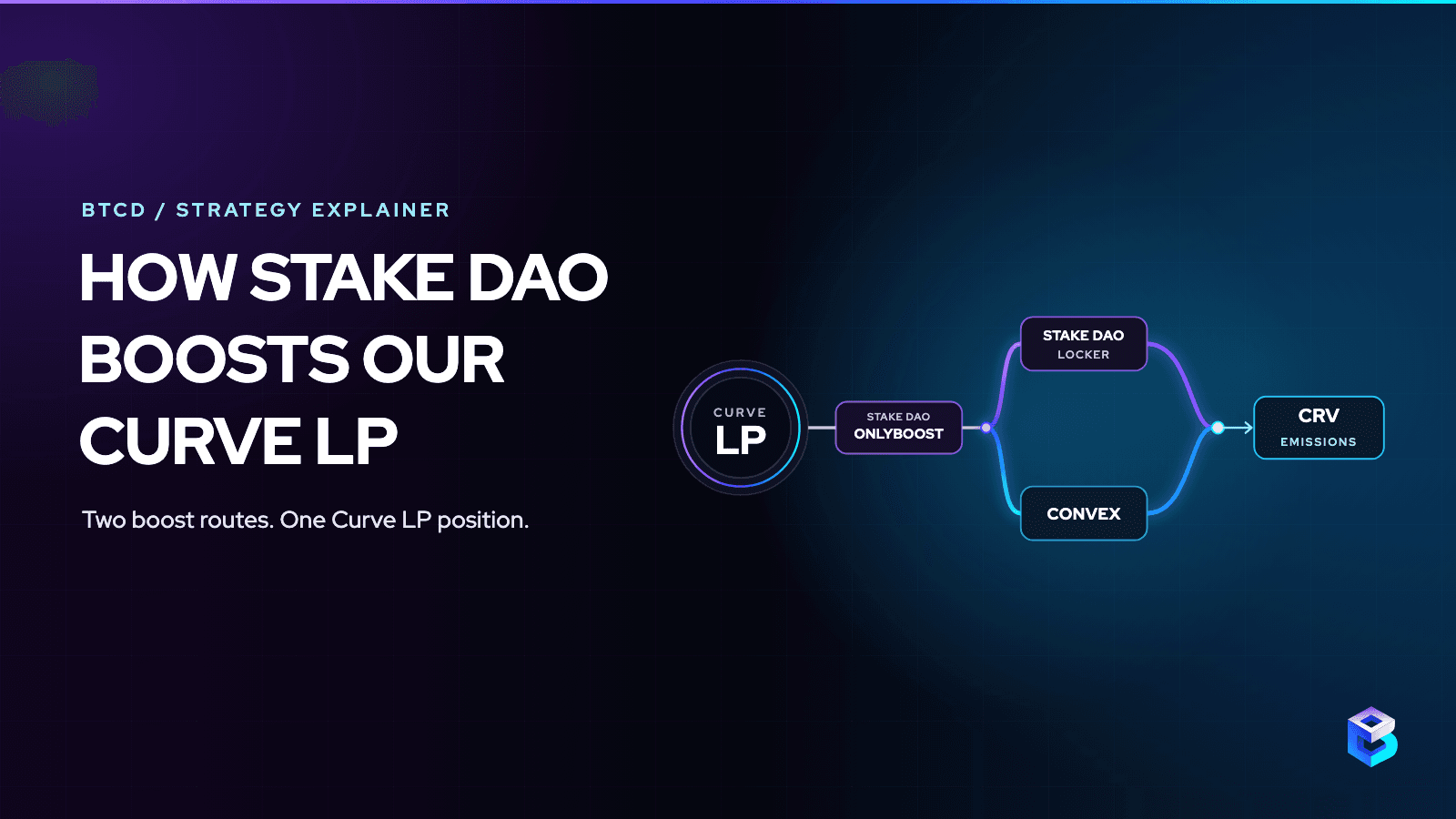
Stake DAO provides BTCD’s USD sleeve a unique venue to generate yield. Allocating to their Yield Strategies automates yield optimization by taking our Curve LP token, staking it in the Curve gauge, and boosting the CRV emissions on it using veCRV the protocol already owns.
The mechanic
Curve pays CRV emissions to LPs who stake in a gauge. How much you get depends on how much veCRV you hold. An LP with no veCRV earns the base rate. An LP with enough veCRV earns up to 2.5 times that. Same pool, same deposit, different payout.
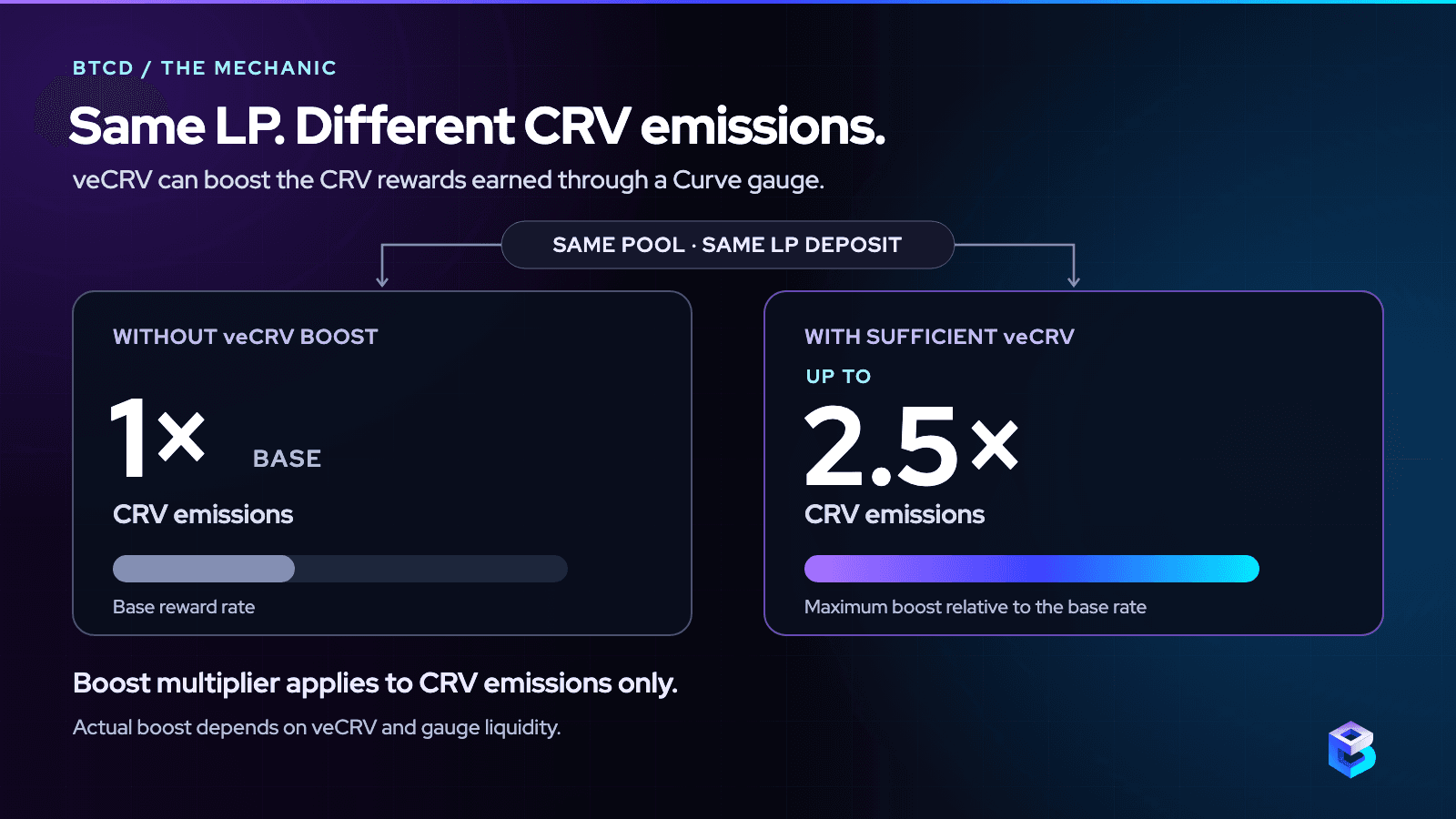
So there are two ways to get the higher number. Buy $CRV and lock it for four years, or borrow someone else's lock.
Stake DAO runs the second option. It operates a permanent CRV locker holding about ~15% of veCRV supply, second only to Convex. When we deposit an LP token into a Stake DAO strategy, the protocol stakes it into the Curve gauge through that locker. The locker's veCRV applies the boost to our position.
The rewards stream is also more economically efficient than competitors. Stake DAO uses integral based accounting that credits rewards the moment a harvest runs. The older design, which Convex still uses, streams rewards over the following week. Under that design a new depositor earns nothing in week one and an early exit forfeits its accrued share.
We keep the LP exposure. We withdraw when we want. There is no lock on our side and no CRV on our balance sheet.
OnlyBoost, and why the split matters
Stake DAO is not the only permanent locker. Convex is larger. Whichever locker has more veCRV relative to the LP it already hosts produces the better boost at the margin, and that changes as deposits move.
OnlyBoost is the key differentiator here. It splits each deposit between Stake DAO's own veCRV and Convex, routing to whichever gives the position more boost. It runs on Curve only. In August 2026 the Association reported OnlyBoost at 26.1% of CRV inflation, with the Stake DAO locker at 21.0%.
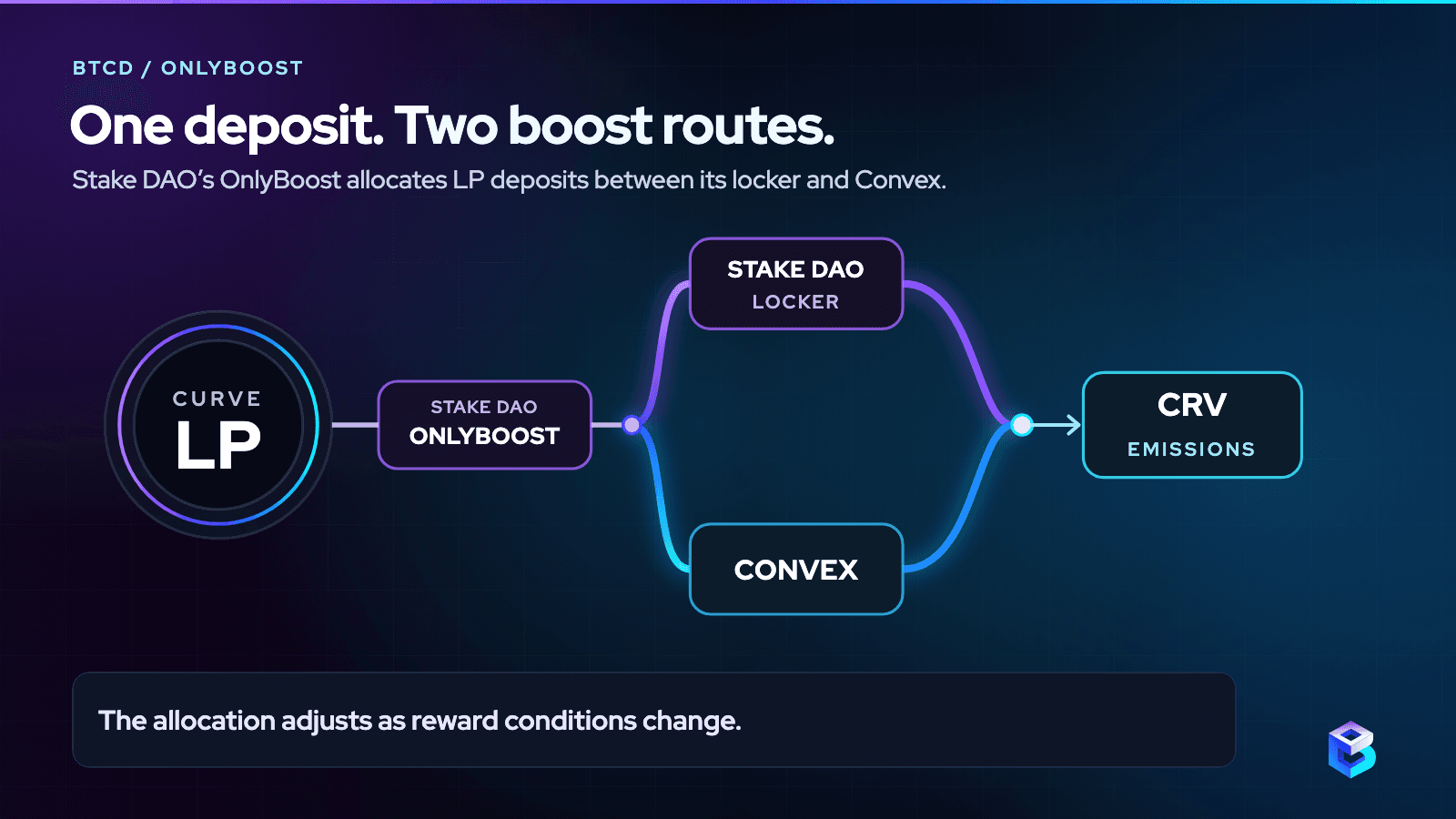
For our protocol, that removes a decision we would otherwise be making manually every few weeks, and removes the work of running two positions to capture it.
What we monitor
Composition and peg of the stables in our pools. Gauge weight on those pools. OnlyBoost share of CRV inflation. Harvest frequency on our positions. Governance items that change the fee. Any new incident disclosure.
If gauge weight leaves our pools, or the fee share of return keeps shrinking against emissions, the position gets cut.
The return still comes from Curve. What we buy from Stake DAO is a boost we do not have to fund with a four year lock, staked automatically, with rewards credited when they are earned and a fee that is published rather than implied.