August 11, 2026 · BTCD Team
How RWAs and Challenger Stablecoins Are Quietly Building DeFi's Best Risk-Adjusted Yield
Two things are happening in DeFi right now that look unrelated but aren't. A wave of tokenized real-world assets is arriving on-chain hungry for TVL, and a new class of stablecoin issuers is willing to spend the treasury yield behind their coins to buy market share. Where the two meet — leverage looping vaults on Aave, Morpho, and Kamino — is producing some of the best risk-adjusted returns in DeFi. And unlike the yield farming of past cycles, the math doesn't depend on a token printer.
The yield is real
There is a new generation of RWAs that have tokenized dollar yield from well-understood traditional finance instruments: reinsurance portfolios, HELOCs, off-chain institutional lending against crypto collateral, basis trades and futures arbitrage, FX hedging, auto loans, and more. Each of these ultimately depends on its underlying market and the risk management of the operating team behind it, but there is little doubt that the yield is real — and that a well-managed portfolio can outperform the risk-free rate with minimal drawdowns.
The stablecoin margin war
Meanwhile, the dollar-pegged stablecoin market has bifurcated. The incumbents have achieved network effects that let them capture the treasury yield backing their stablecoins as profit rather than distributing it to users. This is not an unfamiliar dynamic: the big banks pay negligible interest while fintechs try to overcome notoriously sticky switching costs by offering users yield on their deposits.
Tether is one of the most profitable companies in the history of the world on a per-employee basis. It simply doesn't require a large organization to operate a stablecoin, and Tether's early-mover advantage has made it deeply embedded across DeFi and centralized exchanges. The same is true of Circle.
Challenger issuers are attacking those moats with different strategies.
USDG is betting it can overcome network effects by promising the market — and an army of distribution partners — that the vast majority of the underlying treasury yield will be shared with them. As Bezos would put it: Tether's unparalleled margin is their opportunity.
PayPal's PYUSD, on the other hand, brings a trusted brand to existing DeFi users, plus a massive network of non-crypto users who have no existing preference for USDT or USDC. In a sense, PayPal has been running a stablecoin for twenty years — just not on public blockchains. If stablecoins grow to $3 trillion over the next few years, as Secretary Bessent predicts, it is not difficult to imagine PayPal gaining significant market share even while USDT and USDC continue up and to the right.
PayPal can offer the same yield-sharing incentives as USDG, but I would expect the internal financial models at PayPal and Global Dollar look different. PayPal presumably imagines sharing net interest to promote adoption and slowly tapering off as it approaches Tether's scale — at which point it replicates Tether's economics. (Worth noting: PayPal already reports $40–42B in "funds payable and amounts due to customers," something functionally similar to a stablecoin float — which puts into perspective the scale Tether ($182B) and Circle ($72B) have already achieved.)
Where they meet
Here is where this gets interesting. DeFi is currently being inundated with RWAs hungry for TVL growth. Simultaneously, challenger stablecoin issuers are happy to spend underlying treasury yield for marketing purposes. Across borrow/lend marketplaces like Aave, Kamino, and Morpho, these two phenomena come together to serve an audience that is more than happy to take on a bit of leverage risk to juice their returns.
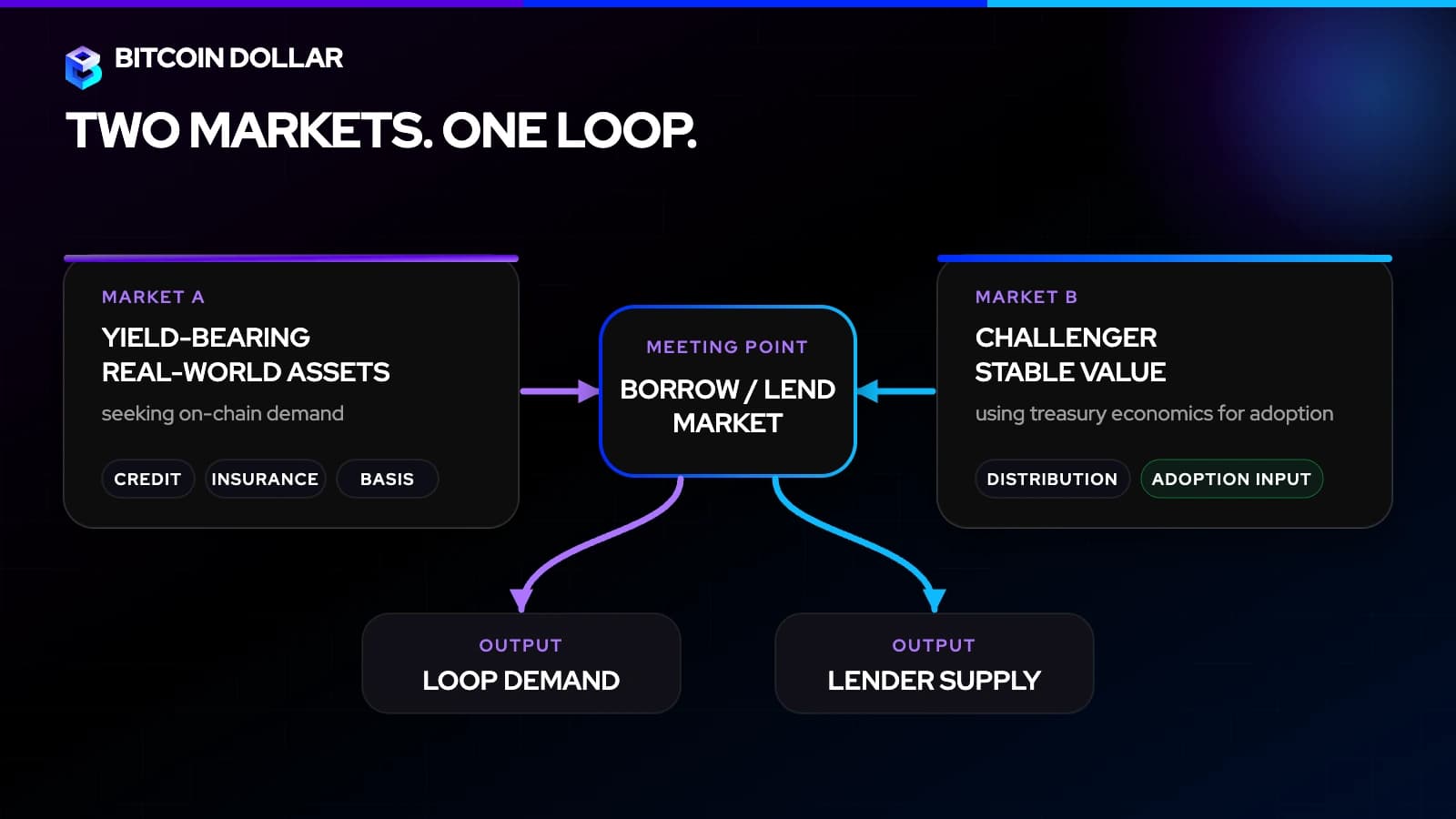
Take Kamino's Multiply page as an example. You'll find ONyc (reinsurance), AUTO (auto loans), USDe (basis trade), PRIME (home equity loans), and SYRUP (institutional crypto-backed lending) all running campaigns. In each case, the yield-bearing RWA is used as collateral and a stablecoin is borrowed against it. If the loop is working, the user is earning more on the RWA yield than they are paying to borrow the stablecoin. With each loop, the user swaps the borrowed stablecoin for more of the RWA, with Kamino capping leverage anywhere from 2x to 13x depending on the goals of the campaign and the liquidity of the RWA should things need to unwind.
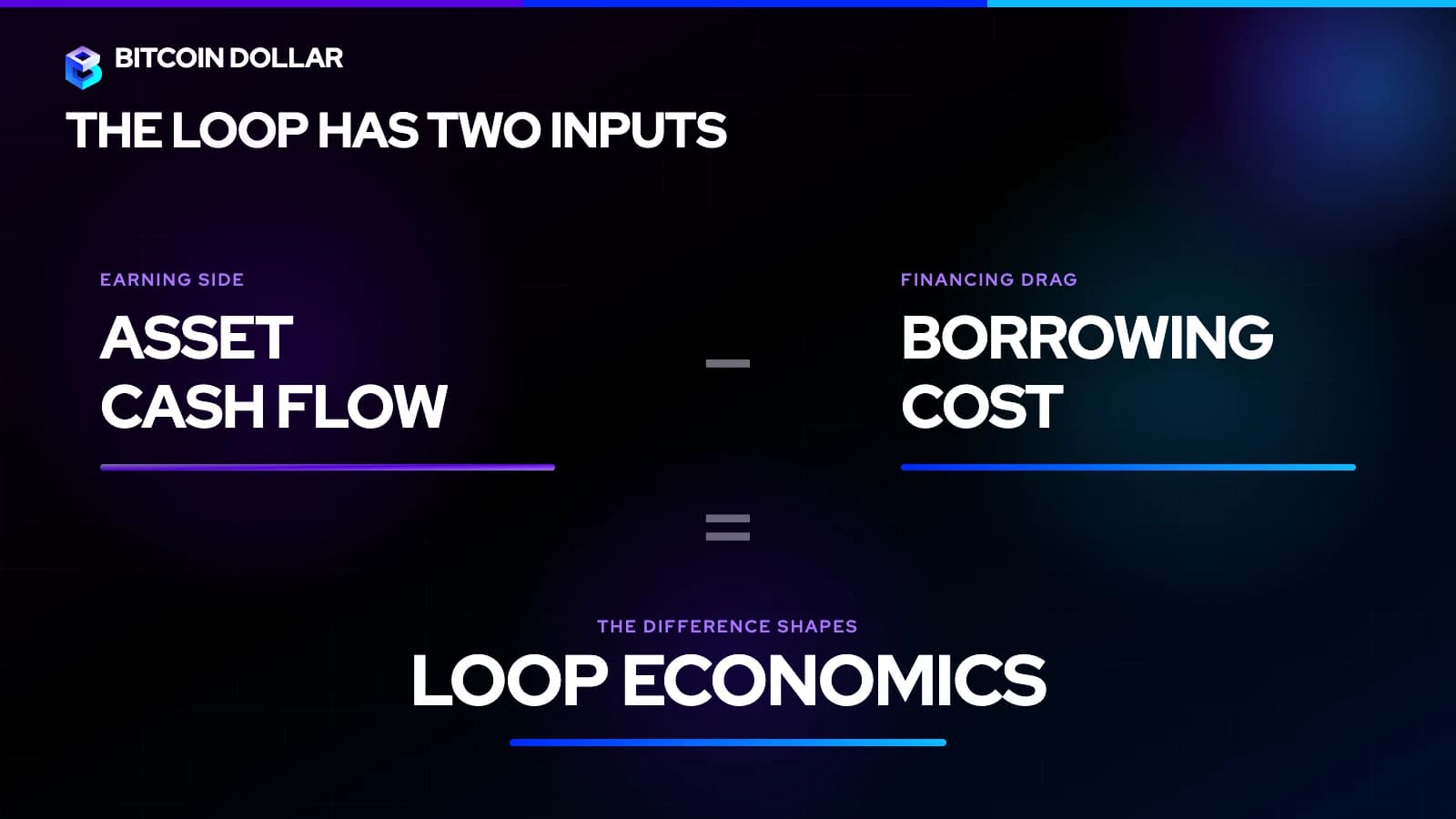
But you should recognize that any loop has exactly two inputs: the RWA's yield and the stablecoin's borrowing cost. Which means one way a stablecoin issuer can make looping dramatically more attractive is to subsidize the borrow with a rewards mechanism. If your loop requires you to pay $50 of stablecoin interest every week but you are also receiving a $25 weekly reward from the issuer, your borrowing cost was just cut in half — paid for out of the treasury yield sitting behind the very stablecoin you borrowed.
The sharper version of this play, though, doesn't subsidize the borrower at all — it subsidizes the lender. Loopers are acutely rate-sensitive: the higher the borrow rate goes, the less profitable the loop, and the campaign dies. So the goal is often to hold the USDG or PYUSD borrow rate at roughly the same level as the organic USDT/USDC borrow rate on the venue, so the RWA looper never gets squeezed — while the treasury interest is streamed to the lender as a subsidy. The result is a market where lending USDG or PYUSD earns ~7% while lending USDT or USDC earns ~3.5%, for what is functionally the same credit exposure.
And that is how a challenger actually pulls market share from Tether and Circle. The looping mechanics manufacture durable borrowing demand for the challenger's coin — RWA loopers are happy to pay to borrow, right up to the rate where the loop stops working. The doubled lender yield then migrates the deposits: no curator can justify sitting in a USDT market earning half the rate for the same risk. Every dollar that moves is float leaving Tether's balance sheet for the challenger's — which is precisely what the treasury yield was spent to buy.
The third player
The other important player in this game is the yield curator. Hop over to Kamino's Earn page to see them in action. These teams bring some of their own war chest along with an aggregation of user deposits to lend the USDG, PYUSD, and others into these markets. Some are embedded in a specific campaign and committed to a specific loop; others stay agnostic and constantly rebalance toward whichever loops are offering the best yields.
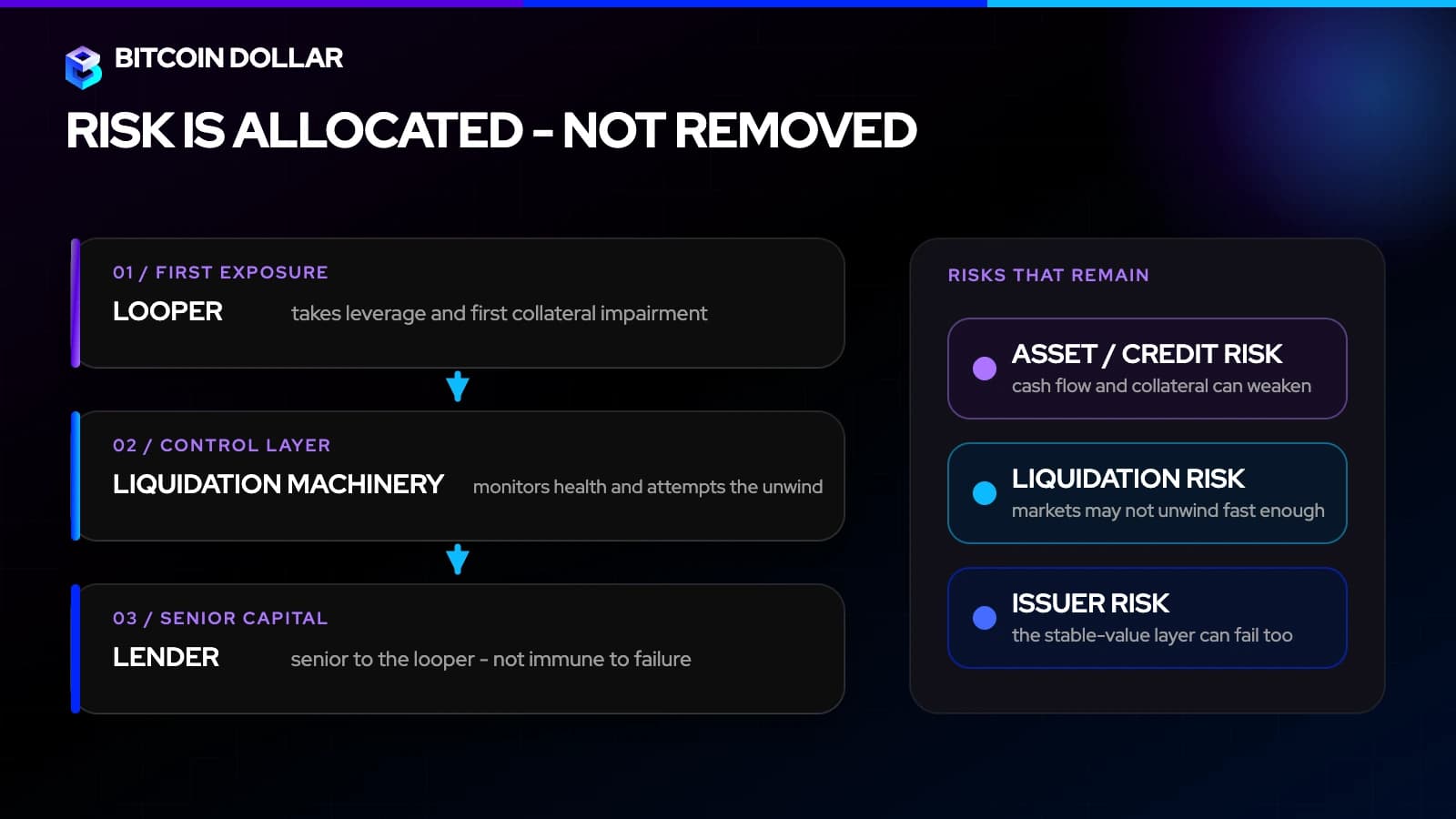
The yields aren't as high as what's available to the looper — but that's the point. Lenders sit senior in the stack, significantly insulated from RWA depeg risk so long as the marketplace can digest a depeg event and liquidate the looper's collateral fast enough to make lenders whole. It's an honest trade: the looper gets levered yield and takes the tail risk; the lender earns a spread over the risk-free rate for underwriting the liquidation machinery.
Paid, not printed
So why call this more sustainable than the yield farming DeFi grew up on? Look at where each dollar of yield comes from.
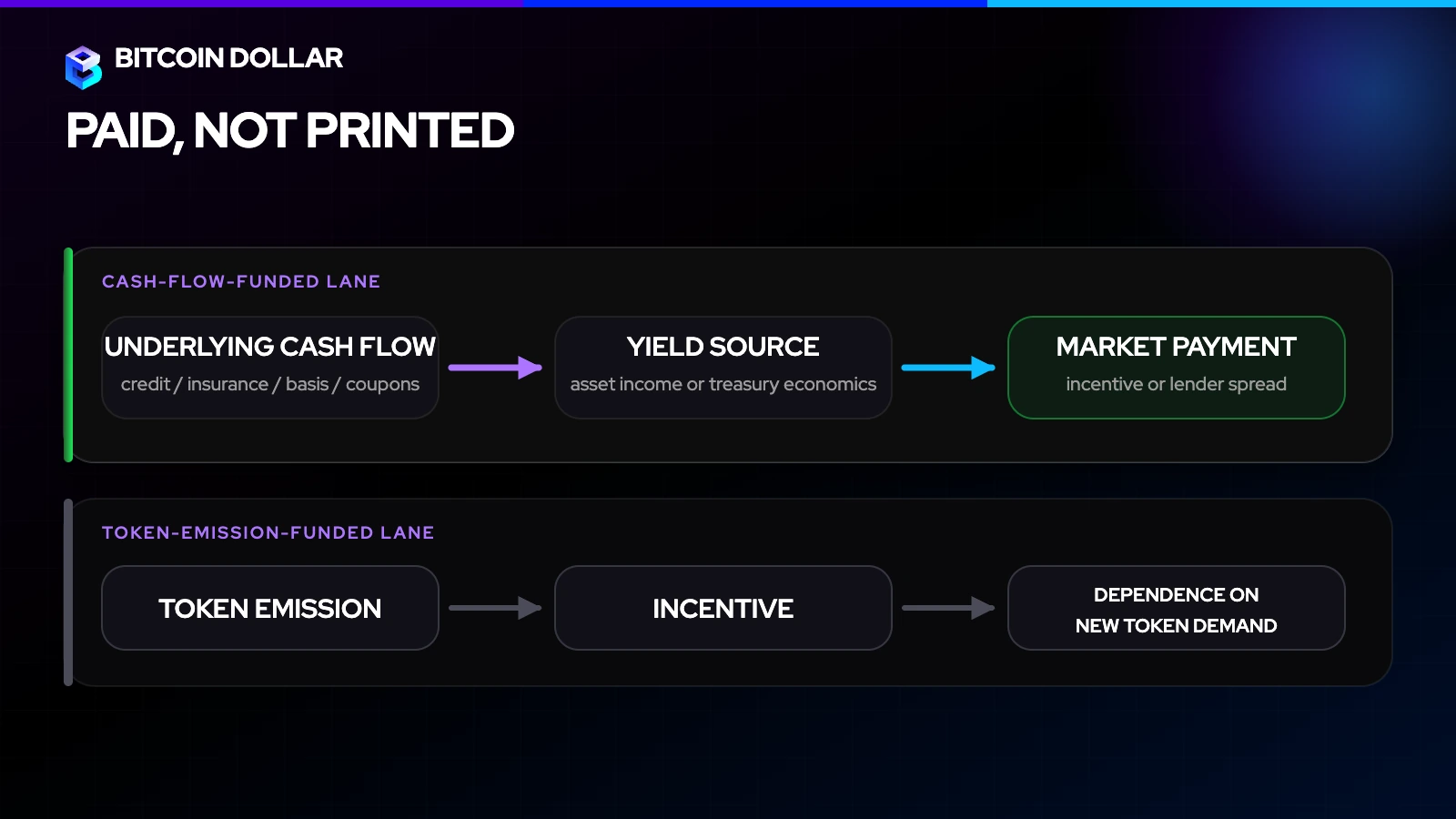
In 2020–2022, farms paid triple-digit APYs in freshly printed governance tokens. The yield was funded by whoever bought the token next; when the music stopped, so did the yield. In this stack, every leg is a real cash flow: insurance premiums, auto-loan interest, basis spread, treasury coupons. Even the subsidy — the part that looks most like old-school incentives — is real revenue being redeployed as customer acquisition, the same way a fintech spends to win deposits. It's a marketing budget spent to acquire the most durable asset in the stablecoin business — float — not an emissions schedule masquerading as yield. And notice that this budget is effectively endless, because it isn't really an expense at all. It's simply the foregone profit that Tether or Circle would be earning on the same deposits. The challenger isn't spending money; it's declining to take a margin. As long as treasuries pay a coupon, the budget replenishes itself.
The risks haven't disappeared; they've become legible. Credit risk in the RWA, liquidation risk in the loop, issuer risk in the stablecoin — all of it nameable, priceable, and tranched between the looper who wants the upside and the lender who wants the spread. That's what sustainable looks like in DeFi. Not the absence of risk — yield that is paid rather than printed.
And for anyone feeling nostalgic: there is nothing stopping these RWAs or stablecoin issuers from recapturing a little DeFi Summer magic by airdropping or emitting a governance token on top as a bonus. Several probably will. The difference is that this time, the token is the dessert — not the meal.